
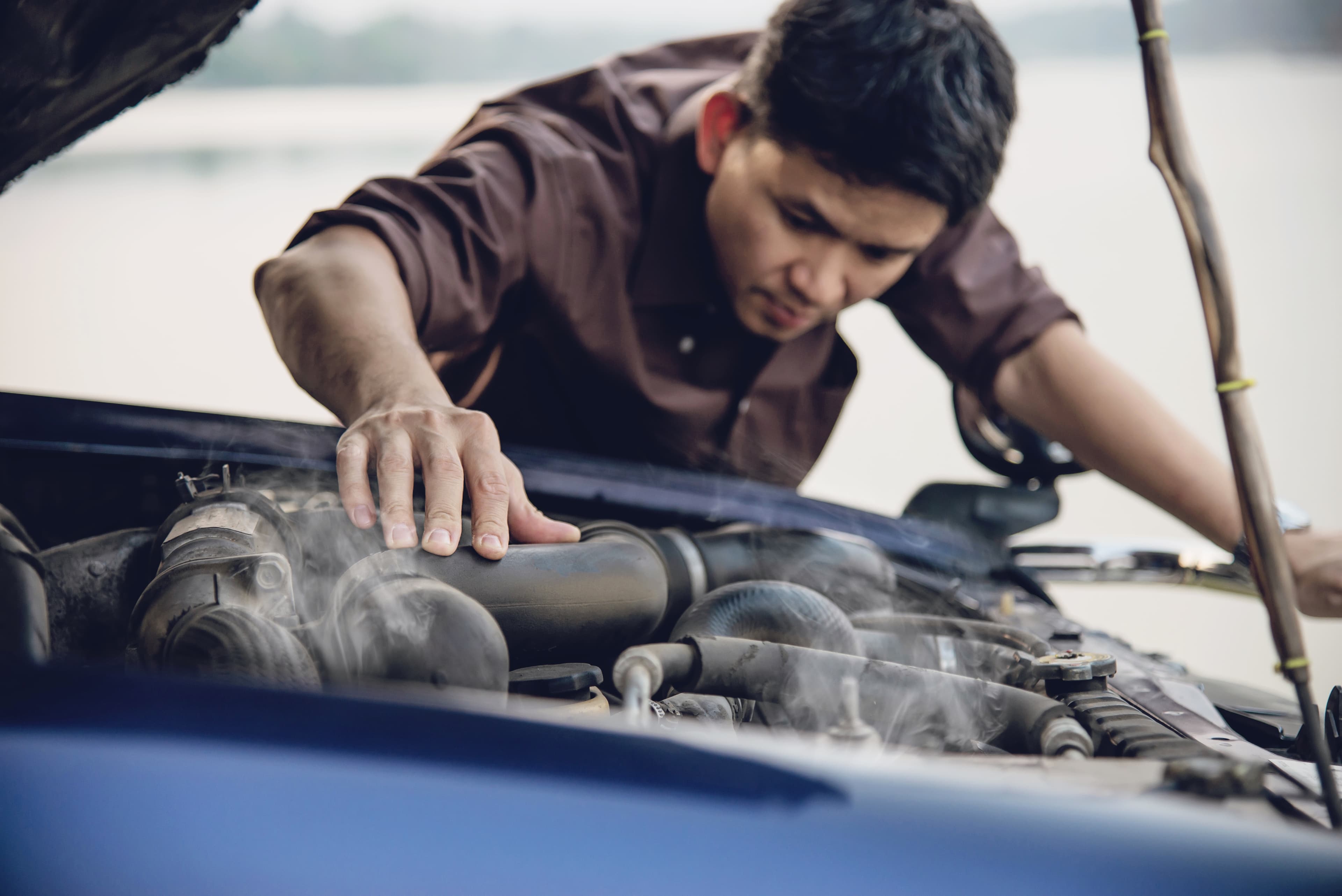
Car engines commonly overheat, especially in the summer months. Therefore, it is paramount to understand how to prevent such overheating to avoid large car repair bills and costly breakdowns.
This guide will give you basic information on keeping your car cool and running smoothly even on hot summer days.
To adequately forestall an overheating event, one needs to get a basic understanding of what causes overheating.
Overheating occurs when the engine cooling system is not able to disperse engine heat efficiently, and hence the engine temperature rises above the normal permissible operating temperature.
Several factors could contribute to it, and recognising them is the first step in keeping your car running much longer and more reliably. Regular checking and servicing of a car engine safeguards against the chances of overheating.
Various factors may cause an engine to overheat. Some of the commonly encountered problems are:
Among the causes of engine overheating is a leak in the cooling system, causing low coolant levels in the radiator to cool the engine effectively.
Another cause is a malfunctioning thermostat, which creates a backlog in the flow of the coolant, thus not allowing proper control of engine temperature.
Lastly, a defective water pump may not circulate the coolant sufficiently from the radiator to the engine, aggravating the situation.
Any problem with the fan that allows heat dissipation from the engine may also cause engine overheating, especially while the car is idling or moving very slowly in hot weather.
These indications can help avoid disaster if recognised early enough. Rising temperature on the gauge is one of the first signs that the engine has overheated. Some cues warning of the car overheating problem include:
Should any one of these warnings come into play, you must take action fast to help cool the engine and minimise any further damage.
To overheat gives severe consequences for a vehicle. Too much heat from the engine parts in turn will damage them as well, and some of the most important engine parts, such as the head gasket, engine block, and even the pistons.
It can lead to expensive repairs or, in very rare cases, an entire engine replacement, especially when the overheating car problem is left unattended. Overheating can also cause breakdowns, leaving you stranded and in need of a tow.
Even worse cases are actually the long-term damages caused by repeated overheating, which would prevent the car from living its normal lifespan and performance.
So taking precautions and fixing those signs of overheating early is very important to safeguard your investment and your safety.
Coolant is a key aspect of the auto engine cooling system and is furthermore an important factor in regulating engine temperature so that the engine does not overheat.
The specially formulated liquid circulates through the engine, absorbing heat from the engine and carrying it away to the radiator, where the heat is released.
Thus, maintaining an appreciable level of coolant is critical to ensuring that the engine regulates its operating temperature in any given environment, which is especially relevant in the hot summer months.
A low amount of coolant could accelerate overheating in the engine, putting certain engine components through a level of stress that results in massive losses in repair costs.
Furthermore, the coolant also contains antifreeze, which prevents it from freezing in winter and thus gives the engine block protection against cracking while making sure that the engine heat is being dissipated.
Therefore, regular coolant checks and flushing, along with engine oil level checks, form much of the preventative maintenance on a car that averts summertime overheating.
The radiator in the cooling system, as well as the engine, is responsible for transferring heat that has been removed from the engine.
After it has passed through the engine and absorbed heat buildup, the coolant flows back into the radiator again. The radiator has fins and tubes that enhance the mechanism of heat transfer from the coolant into the air through the radiator fins.
This is called the process of cooling the incoming coolant before allowing it to flow back into the engine.
Hence, without a properly functioning radiator, it would be impossible to maintain the temperature of the engine in its normal range and avoid overheating in such warm weather.
Damage or blockage in the radiator will thus take a great toll on heat dissipation from the car's engine and trigger overheating. It is equally important to routinely check the radiator for leaks or damage to prevent overheating of the vehicle.
Hoses are damper roads which contain the system connecting the engine, radiator, and other components.
The hoses must be sufficiently strong and withstand high-temperature and high-pressure conditions to allow the proper circulation of the coolant around the engine bay.
A leak from any of those hoses can produce a low level of coolant and lead to rapid overheating of the engine and possibly cause it to break down.
Regular inspection of the hoses is important for any signs of wear, such as cracks or swells, and the replacement of worn or damaged hoses is crucial to the cooling system, so your car does not overheat when the summer heat reaches full force. These hoses are instrumental in keeping the engine cool.

Periodical maintenance checks are the greatest way of preventing a car from overheating at all times, especially during the hot summer months when the car tends to be parked under shade most of the time.
A cooling system inspection would also form part of your routine maintenance schedule. It involves checking the coolant levels in the radiator and ensuring that debris is not blocking it.
Checking the hoses for any signs of leaking or wear, and checking the radiator cap to ensure that it's sealing properly.
Fixing potential problems before they become full-blown issues could better keep your car engine from overheating and thus avoid costly auto repairs.
Engine maintenance is one of the greatest contributors to longevity and reliability when it comes to your vehicle, while giving you peace of mind in driving during the hot weather.
Checking the coolant level is an elementary but important activity in preventing your vehicle from overheating.
This is usually observed in a few steps which include checking the engine oil for any faults, switching on the radiator, locating the coolant reservoir, which is usually a translucent plastic container placed chassis close to engine attaching the engine access; if it required examination of any air into it, ensure that the engine is well cool before unscrewing the radiator cap or the reservoir to avoid burns from hot coolant beneath the cap; wherein it occupies the lowest of both of the minimum and the maximum markings in the reservoir, and if low, top with the appropriate type of antifreeze and coolant mixture as recommended by this manufacturer within the owner's manual; to monitor the fluid level in the coolant reservoir from time to time, and add either antifreeze or coolant depending on the measured amounts.
This habit can help avoid worrying consequences surrounding overheating, often at summer.
The cooling system should have an adequate performance level to prevent the car engine from overheating.
Flush the cooling system from time to time to eliminate deposits or contaminants that might obstruct heat transfer.
A clean cooling system will help maintain the engine temperature somewhere around the normal operating temperature, which is very critical for the best performance of the given car.
Checking the thermostat is a vital test, for it must be opening and closing at the proper points in order to allow coolant flow as needed.
The cooling fan must also be checked for efficiency when the car is idling or even moving slowly during the hot summer months; that's when overheating will happen.
Those are some things, including oil and engine checks, which will stop your car from overheating and maintain a great performance all through the summer!
Keep your car's cooling system in top condition. Schedule a maintenance check today and prevent overheating issues before they start.
Book your appointmentKeeping a close tab on engine temperature, especially during a hot summer, is one sure way of preventing your car from overheating.
The temperature gauge on the dashboard gives you current information about the engine temperature of your car at any point in time. You should routinely check the gauges to ensure that it operates within the given range.
If you see the needle creeping towards the red zone, you know that you should be acting immediately because, in layman's terms, this means the engine is beginning to overheat.
Ignoring it means that your car will probably need serious repairs after that scenario, and maybe even overheating under the hot summer sun, which usually means that an overheating vehicle is certainly causing more trouble.
Being very cautious in terms of examining that temperature gauge helps prevent system overheating and makes your drive safe.
Driving in summer has some tricks to cut scenario ex other best practices, that can reduce overheating your car.
Avoid stop-and-go traffic for as long as possible because they cause extended engine idling, to get the temperature to rise.
When caught in a traffic jam, it would be better to turn off the engine to let it cool down. It's best not to run the air conditioning in one's vehicle all the time, for the engine's sake.
Ensure that the entire cooling system is in optimal condition before even one attempts a long drive under the summer sun.
All simple precautions could help: one, checking engine oil, could save a person from overheating and keep the engine on the smooth track.
Fuel economy is good for your pocket and, at the same time, prevents the car engine from overheating; an efficient engine produces less heat, thus placing less strain on the cooling system.
Keep a proper tyre pressure, for low tyre pressure means exerting more load on the engine. Aggressive driving, for instance, involves a whole lot of heavy acceleration and braking, causing the engine to work hard and produce much heat.
Regular maintenance, repairs, oil changes, and tune-ups help to keep the car fuel-efficient while reducing the chances of overheating. Extra careful driving can keep the engine cooled down and working for a long time.
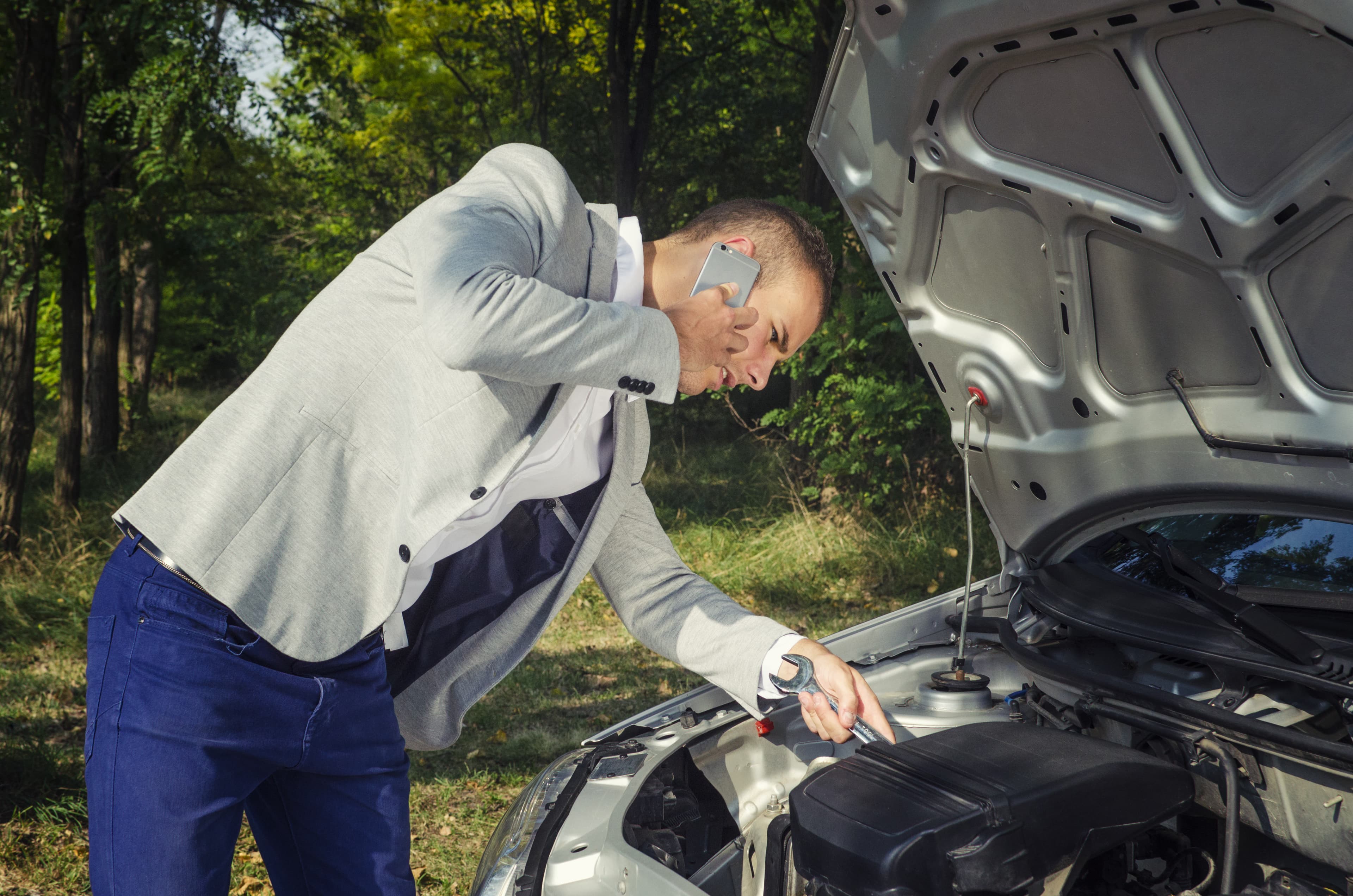
There are certain steps to be followed in case the car engine overheats in order to reduce damage. The first step is to safely pull off to the side of the road.
Another thing to do is to switch the engine off to prevent any further creation of heat by the engine.
Allow it to cool off for a minimum of half an hour before attempting to open the hood. Once the engine has cooled off, carefully check the coolant level. If it is low, please add some coolant - if available - to avoid any further overheating during summertime.
However, never remove the cap on the radiator while the engine is still hot, as this may result in serious burns from the scalding-hot coolant and heat emanating from the engine. Following these steps may help reduce the engine's temperature and further damage.
Sometimes, there may be cases when you do all that you can do, but still, your car engine would continue to have problems again, particularly in cases of burning.
Notice leakage signs that have become major in the cooling system, or when the temperature gauge keeps rising despite measures taken to keep the engine cool: that is when the car should be towed for more extensive repair from a mechanic.
Driving with an overheated engine can damage internal engine parts badly, requiring costly repairs or replacing the engine, so if you have to tow the vehicle, you should. It is by his training that he can find out what actually ails your car and repair it to restore a proper working cooling system for the best car performance.
By bringing it to a professional, it is possible to help your car avoid overheating altogether.
To prevent any possible overheating problems and damage to engine components in the future, one must maintain the cooling system. Find your trusted car mechanic with an appointment to schedule for maintenance of all the components.
Watch for the warning signs. Is the temperature gauge sitting high? Are there bad smells coming from the engine area? Or is there any sign of a coolant leak? Address any issue as soon as possible, so it does not prolong.
Remember, only good quality coolant should be used, and name it to be flushed at intervals recommended by the manufacturer. This will keep the automobile engine cool and running reliably in the summertime and prevent overheating problems.
For more information on preventing your car from overheating, especially in traffic conditions, check out our comprehensive guide.
Don't let engine overheating ruin your summer drives. Schedule a cooling system check today and keep your car running smoothly in the heat.
Book your appointment