
The vehicles, now truly luxury models, are all technological miracles, very different from their more purely mechanical ancestors. Most of them have multiple ECUs for better drivability.
The greatest enhancement in this area has actually come from the ECU electronics, a very smart computer system that controls almost every aspect of a car, from telematics to real-world performance metrics.
Understanding how an ECU works and how modern luxury cars are enhanced using ECUs and diagnostics can give an appreciation of the performance, safety, and comfort those cars offer.
This article will explore the wonderful world of automotive ECUs and diagnostics and how they work, their types, and their importance in modern vehicle operation, particularly in safety-critical applications.
An electronic control unit (ECU) could be seen as the brain in a modern car. A very high-tech control unit, this embedded computer system receives data from several sensors in various locations in the car, processes that data using very advanced algorithms, and sends commands to actuators to control different systems.
The car's ECU monitors anything from engine temperature to coolant temperature, throttle position, brake pressure, wheel speed, and idle conditions for the optimisation of performance of various compartments of the vehicle.
Data received from the sensors allows ECUs to vary operations in real-time to optimise performance, ensure safety systems are active, and minimise emissions.
Modern luxury cars contain numerous ECUs, each responsible for a specific domain or set of functions.
Here's a look at some common examples, illustrating how each ECU may serve a specific function within the vehicle's overall compartmentalised system.
| ECU | Task |
|---|---|
| ----- | ------ |
| The ECM-(Engine Control Module) | controls the operation of the engine, such as fuel injection, ignition timing, and emission control, but also deals with sensor input coming from different systems. |
| The TCUGearECU or transmission control unit | heightens shifting. It assures that the points for shifts will maximise both performance and economy. |
ECUs, in addition to those that are in place for the brake: ABS, stability control, climate control, airbag, and even the infotainment system.
Any of these works on data input. And there are, in fact, newer cars boasting up to more than a hundred ECUs under their hoods.
The ECUs optimise vehicle performance by governing engine speed and other major parameters.
By continuously tracking sensor data, the control unit can regulate a range of parameters in real time, including gear shifts, aimed at optimising power delivery, enhancing fuel economy, and minimising emissions.
The ECU can modify air-fuel ratios in the combustion chamber based on drive and driver conditions to ensure smooth combustion, with appropriately timed gear shifts.
The ECU manages several functions: controlling the throttle valve, ignition timing, and transmission to supply the set torque and power.
In addition, the ECU advanced vehicle diagnostic systems that detect the fault and support fault diagnosis: the information provided supports technicians during repair and maintenance, and guarantees the proper and smooth operations of each compartment.
ADAS systems are found in modern luxury cars: adaptive cruise control and lane-keeping assist are two basic functions.
All the above-listed electronic control units differ with respect to their work and must share data with the telematics system to keep in touch with other subsystems.
All these are interconnected to a common network and share signals with one another through an appropriate telecommunication protocol like the control area network/ Ethernet.
This means that control units such as engine control unit (ECU in a car), transmission control unit, brake control unit, and so on can communicate effectively.
Suppose there is a malfunction in one ECU; it can potentially lead to problems in the entire network, resulting in cascading problems affecting other vehicle systems, including those monitored by automotive Ethernet.
The latest condition monitoring diagnostic systems assess this communication and report on errors in data transmissions that may indicate a fault with the ECU while documenting pertinent diagnostic trouble codes.
Modern ECUs are actually integrated in such a way that they can use this connectivity for optimal advanced performance and eliminate safety risks.
It becomes increasingly relevant when dealing with safety-critical applications, which not only need to work efficiently but also intelligently in communication.
The electronic control unit, or ECU, has become synonymous with real-time data processing and monitoring in modern vehicles for optimal quality and efficiency of fuel used.
Each ECU is provided with highly powerful microprocessors that perform a small number of complex calculations to analyse the data provided by the sensor in real time.
The engine control module, also called the engine control unit, adjusts fuel injection and ignition timing by continuously monitoring parameters like engine temperature, throttle position, and oxygen levels.
The brake control unit monitors both wheel speeds and brake pressures constantly to avoid any skidding.
All the noted events rely heavily on sensor functions if drivability is to remain intact. Real-time monitoring enables the ECU to perform instant interventions that ensure maximum performance, emissions control, and safety, especially in throttle body control.
These advanced diagnostics systems depend on those databases to detect deviations and diagnose possible faults.
The accuracy and swiftness of data processing are fundamental parameters used by adaptive systems such as the advanced driver assistance systems, since the memory of the ECU will hold a key role in optimising these operations.
OTA updates have changed views on the evolution and maintenance of modern luxury cars, such as updating the firmware in the car's ECU.
Manufacturers can install OTA by updating the software of common ECUs, including the engine control unit, transmission control unit, and many others.
OTA is capable of fixing software bugs, boosting performance, adding security, and even creating new features regarding engine management and real-time operation capabilities, such as adjusting injection timing.
Thus, a modern vehicle can develop over time without seeing a service centre. Reliability and safety in OTA updates are essential, while a dead update may result in a disrupted ECU that can affect the whole performance and safety chain of a vehicle.
This often entails some recalibration, coding, or testing to verify that the new software version will operate normally and does not place new error codes.
In order to identify a faulty process, the diagnostic software reading the OBD must be updated accordingly.
Need expert ECU diagnostics for your luxury car? Book your appointment today and ensure optimal performance with professional diagnostic services.
Book your appointmentECU-a malfunctioning right department-minus all about that-surely do signal out towards maintaining horsepower, and cutting-edge telemetics of modern luxury automobiles.
The failure of any given control unit extends into parameter expressions of different orders in more than one system, causing the driver some discomfort.
The common manifestations of the malfunctioning ECU are diagnostic trouble codes (DTCs) that point to one or more malfunctions, guided by the ECU's authority to alert a user to undesirable repairs needed.
The illumination of warning lamps on the dashboard, like the check engine or ABS lights, indicates that something is wrong in the ECU or safety systems, as decided by the car diagnostic software.
Transmission problems such as rough shifts, failure to shift, etc., may also indicate a damaged ECU. This ECU may enter limp mode, thereby inhibiting the entire automobile compartment.
Various ECU-related problems would require a systematic understanding of the working of the ECU in question.
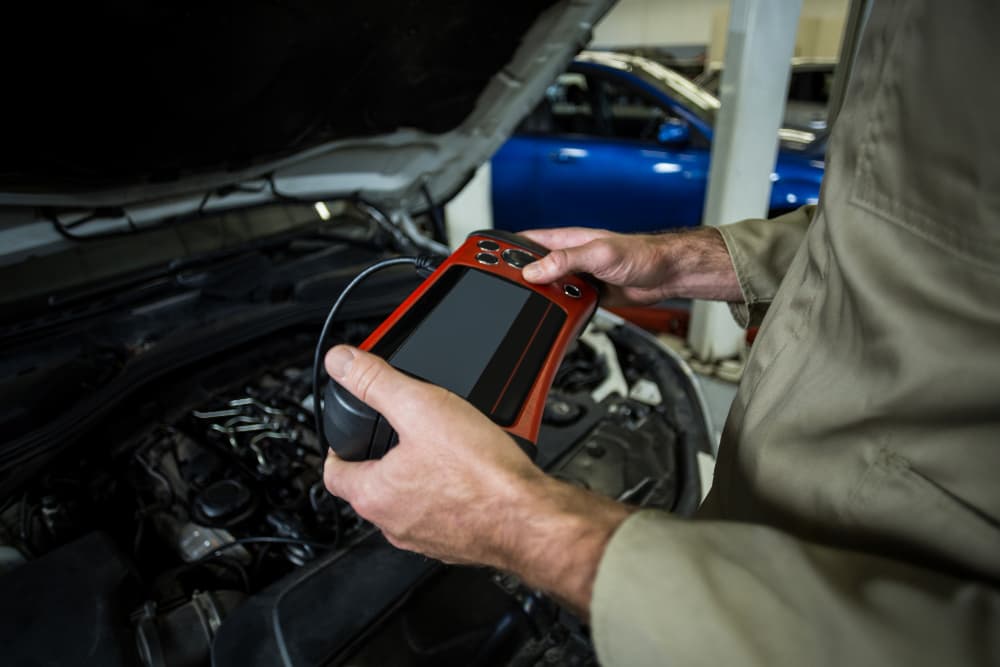
The first step is connecting a diagnostic scanner to the ECU and reading the error codes stored in its memory.
This may give some pointers on the fault, its nature, and its location. However, merely reading the error codes is not enough.
It is also important to interpret them properly, taking into consideration the history of the vehicle, all recent repairs made, and any unusual symptoms seen in relation to the gateway.
If any misgivings are felt concerning a specific system- for example, the engine control module or brake system- the diagnostic effort must be concentrated on the ECU in question and work with its associated sensors, such as the injector and ignition coils.
It would also help to engage with a competent technician experienced with diagnosing ECU issues on modern vehicles.
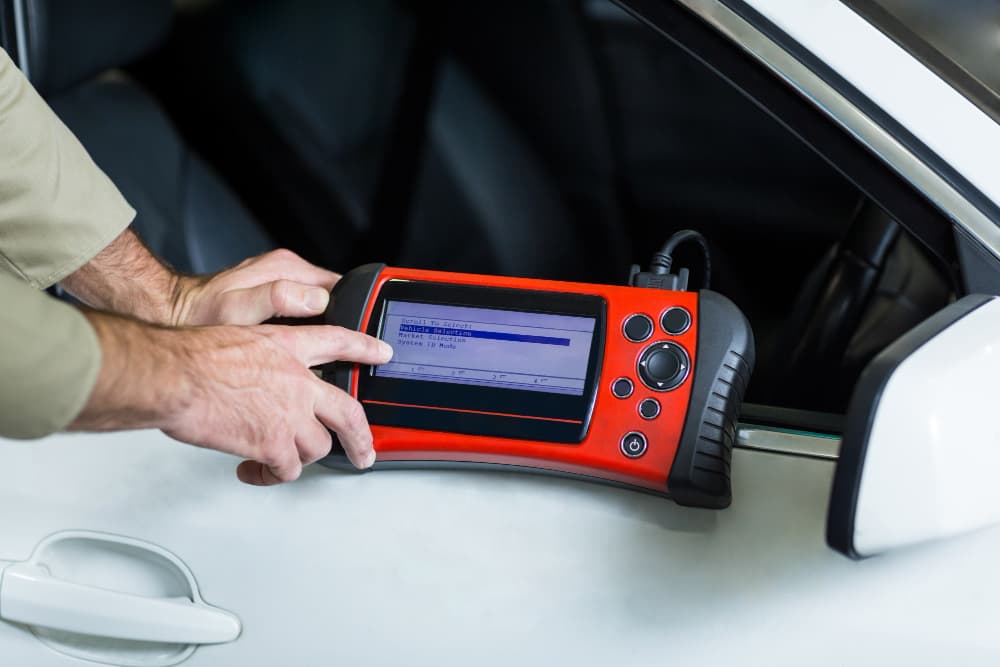
Among hardware and software options for effective ECU diagnostics are diagnostic scanners, which help the technician communicate with the ECU by reading error codes and viewing real-time sensor data.
Other tools include multimeters, which test voltages and continuity across circuits and thus can help detect electrical problems.
Oscilloscopes provide a visual representation of electrical signals for waveform analysis, which is mainly used in diagnosing faults of ignition coils and similar components while retrieving data concerning injection timing.
Special diagnostic software for complex capabilities, including calibration and programming, as well as integration into the immobiliser system.
For instance, when connected to a faulty ECU, it is necessary to ensure that proper and safe diagnostic and service procedures are followed when handling the fault for accurate repairs, with connectivity checks at nodes.
Most critical in this class of systems, such as ADAS, which are adaptive systems, are the diagnostic devices and their sensor nodes.
ETAs allow over-the-air updates to sometimes resolve an erroneous control unit by refreshing the obsolete software and reading the vehicle's subsystems.
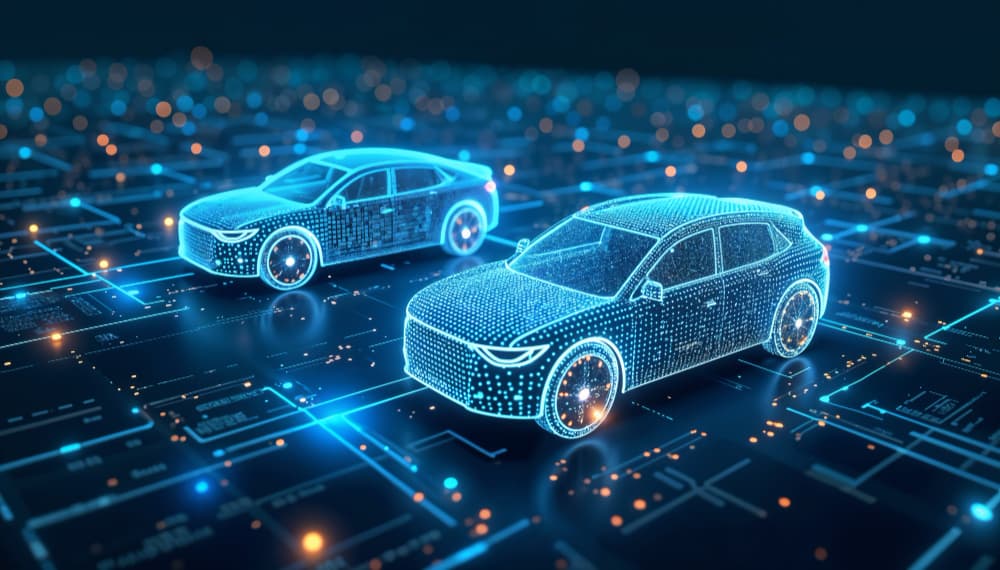
In modern luxury automobiles, electronic control unit evolution is aimed at providing more sophistication, integration, and telematics capacity.
Increased processing power, more efficient algorithms, and increased scope of function control by the ECUs are the advancements on which the emphasis will be, with fuel quality and performance being key factors.
Expect further advanced sensors with rich data streams to allow more accurate real-time decisions by the control unit on idle conditions and exhaust management.
A critical area of development is the use of predictive diagnostics, in which the ECU leverages machine learning to pre-empt fault conditions and limit downtime, thereby increasing total network reliability across the automotive Ethernet.
Miniaturisation and power efficiency will also be key, allowing the stuffing of powerful ECUs into tighter spaces in milliseconds.
This includes the engine control unit, transmission control unit, and other specialised units in various domains of vehicle operation.
It is a major advance in the application of automotive technology, which apparently takes up most of the modern luxury vehicles.
Such cars are now capable of better managing real-world driving situations through the incorporation of ECUs with autonomous driving features.
With increased autonomy in cars, the ECU's role would include sensor fusion, path planning, and decision making, making it a safety-critical element in modern vehicles.
The control unit integrates inputs from various kinds of sensors, including cameras, radar, and lidar, for a complete view of the environment surrounding the vehicle.
All this data goes in real time to complex algorithms, which execute the vehicle's steering, acceleration, and braking along with depth impacts on shift points and overall efficiency.
Such adaptive systems as ADAS rely on robust performance levels of ECUs along with safety systems to guarantee safety and reliability when interfaced with real-world driving.
The electronic control unit handles the coordination of functions like lane keeping, adaptive cruise control, and emergency braking.
Thus, maintains the highest performance across all modes of driving by real-time operating systems.
Future developments will then be directed towards improvements to the robustness and redundancy of such systems to ensure fail-safe operation in all conditions, especially in conditions of power loss, which apply to most such safety-critical applications.
The engine control unit and the brake systems are subsystems of the automobile, and it is these applications that are extremely critical. A faulty ECU may put the car at risk.
Several key trends that are upcoming will be the main determinants in the development of ECUs in current luxury cars in the next several years.
In that light, continued focus will be on OTT updates that will allow manufacturers to change performance, resolve software failures, and implement new features remotely for automobiles.
The diagnostic software will progressively become more sophisticated, thus enhancing the reliability and efficiency of fault diagnosis, which would be made possible by improved data processing capabilities of the ECU.
Cybersecurity will become another area of concern and focus, enhancing the vehicle's well-being against hacking and unwarranted intrusion.
These levels of integration will also rise, linking these engine control modules to cloud services, along with firmware updates for remote monitoring, predictive maintenance, and a personalised driving experience.
There will also be an increasing number of calibrations required. The engine control unit, transmission control unit, and other ECUs need to work seamlessly together within a much larger networking collaboration of subsystems.
AI and ML will also further equip the ECU with the ability to learn from the driver's behaviour and quickly adapt itself to changing conditions to improve performance and efficiency.
Advanced diagnostics will be part of this newer generation flexibility of the ECU and sophisticated sensor technology performing over LIN and FlexRay.
The best driving experience will be ensured by enabling a resilient drivability, comfort, and safety for the driver.
Keep your luxury car's ECU systems running perfectly. Schedule a diagnostic check today and experience cutting-edge automotive technology.
Book your appointment