
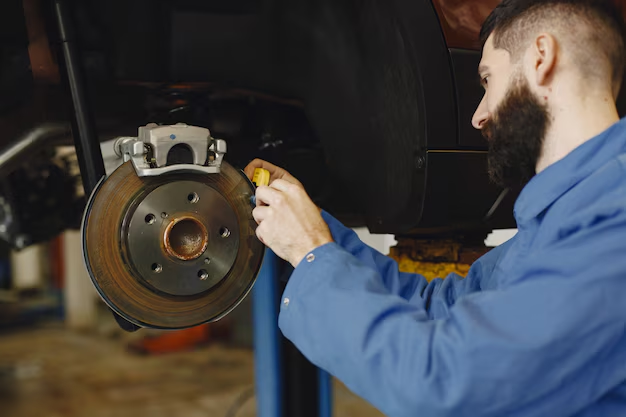
One of the scariest things is to hear weird noises coming from your brakes, and you should definitely not ignore them.
At the same time, it is very helpful to be acquainted with the different types of brake noises and what they mean so that you can keep your car safe and avoid a costly repair in case it turns out that the noise has been going on for a long time.
No matter if it is a squeal, grind, or rattle, your brakes are trying to tell you something through these noises.
With this brake sound identification chart, it will be easier for you to find out which sound is coming from your brakes, understand the problem, and realise that it is time for a brake inspection with a mechanic you trust.
If different types of noises come out of your brakes, it means that the problems in your brake system are pointing to you. A squealing sound is one of the most frequent issues that people talk about.
Usually, this squealing happens when the brake pads have worn out to the brake wear indicator, which is a little piece of metal that is made to produce sound during braking, thus letting you know that brake dust is piling up. If you hear this kind of noise, then it is undoubtedly time for a brake pad replacement.
The sound of your brakes can also be a grinding one. This is a more serious symptom, indicating that the brake pad material has been completely removed, and the rotor is now directly contacting the metal backing of the brake pad.
This grinding can lead to serious damage to the rotor, which means that you may need to replace both the pads and the rotor.
Moreover, the rattle sound can point to the brake calliper having some loose parts or other parts of the brake system being loose without you knowing. The recognition of these common brake noises is your first step to their problem diagnosis.
Multiple situations can cause your vehicle's brake system to produce noises. These may incorporate components like:
Besides these, some of the different causes might be the existence of dirt or rust on the rotor surface and, in drum brake systems, the wearing of shoes or the problem of internal components.
It is indispensable to take the matter in hand right away if you hear an unfamiliar noise during braking.
First of all, check the creaking carefully – when does it happen (e.g., only at the moment of the brake application, always while driving), and where does the sound come from? In case of worn brake pads or if you hear the sound of grinding, definitely pull up the car for brake inspection by a trustworthy mechanic without any delay.
In other words, if you keep driving with brake pads in a bad condition, it is possible that not only your rotors will get damaged, but your stopping ability may be weakened, especially in the case of heavy braking.
The rattling noise may be caused by a loose part that needs to be tightened or replaced; thus, you should make a visit to a mechanic as soon as possible.
The noise you are hearing may only become worse, and, at the same time, you will be faced with an expensive repair bill if you totally ignore it.
Always bear in mind that the brake system is a safety component of your vehicle, and it is very important for you to be safe and for others on the road that you deal with the issues without delay.
Hearing unusual brake noises? Don't wait until it becomes dangerous. Book a professional brake inspection today and drive with confidence.
Book your appointmentIdentifying the high-pitched squealing is one of the ways to diagnose brake issues at an early stage.
Knowing the common brake noises is an essential part of understanding which part of the vehicle - for instance, if it is the brake system or the wheel bearings - is causing the problem. Different noises that can be heard from the brake system may imply various issues, such as:
Squeaking is an unpleasant situation that can be heard most of the time and is usually attributed to the situation of heavy braking.
This is the moment when the brake pads are being worn out, and the metal tab is exposed, which will lead to the one that is most heavily damaged being replaced.
Most probably, the part that makes contact with the rotor is the brake wear indicator. The sound squeaks to warn the user that it is time to change the brake pads.
Grinding noise is one that indicates a tone of even more serious problems, such as hydraulic system failure.
The case may be that the brake pad material has been completely used up, and in the instance of this, the direct contact between the rotor and the metal backing plate of the brake pad will occur.
This is a brake grinding and squealing sound which is quite common when brake issues exist. In this case, the rotor may be heavily damaged, thus making the brake system part that needs replacement not only the brake pads but also the rotor.
Moreover, a brake chirp is an unmistakable sign that the set of brake pads will have to be replaced shortly.
A rattle noise may be the brake calliper that has some loose parts, and, additionally, the other parts of the brake system may be causing the rattle.
Recognising these noises leads to a more precise plan for the replacement of the pads. Make sure to check your car's brakes and specific problems.
There may be brake problems due to factors such as the driving conditions and the top-of-life indicator signal of the pads. Your brakes make noises for a few different reasons. Among the components that cause such noises may also be:
The brake wear indicator touches the rotor; thus, a very high-pitched chirp is heard, which may be the pad wear indicator signalling that it is time to change.
Installing new brake pads is the easiest and probably the most common solution when you hear a sharp brake wear indicator squeaking noise.
The result of this may be a hazardous situation if the conditions of the road are bad. grinding noise.
Besides that, the brake calliper is another part of the brake system that may cause you problems.
The calliper can be a source of uneven brake pad wear if it is stuck or seized, or producing a grinding sound if the constant contact with the rotor is the cause of the wear. The rotor, which makes the braking mechanism run low in lubricant.
Squealing sound or grinding sound. In case of having drum brake systems, worn-out shoes or damaged internal components may also be problematic and produce weird sounds whenever braking.
When evaluating brake noise, knowing what different noises mean is the key to accurately diagnosing the problem. Most of the time, a squealing sound suggests that the brake pads are worn out or that the brake wear indicator is in contact with the rotor.
In general, a grinding sound is the sign of the brake pads being completely removed, and metal-on-metal is happening, which will result in permanent damage to the rotor.
In simple terms, it is the time for a replacement of the brake system. Loose brake parts might be the reason for a rattling sound.
Additionally, brake calliper components, worn suspension parts, or other issues within the brake system might be causing the noise.
Besides that, brake grinding can also mean that there is serious damage to the pads and rotors, which can eventually lead to less stopping power.
If you are hearing some noise during braking, or you need a brake inspection, do not hesitate to get help from a qualified professional to solve another common cause of brake problems.
Regular brake check and getting it serviced on time are the main things to be able to brake safely and prevent issues like moisture buildup. A squeaking sound or continuous noise coming from the wheel area can also be the result of a warped brake rotor.
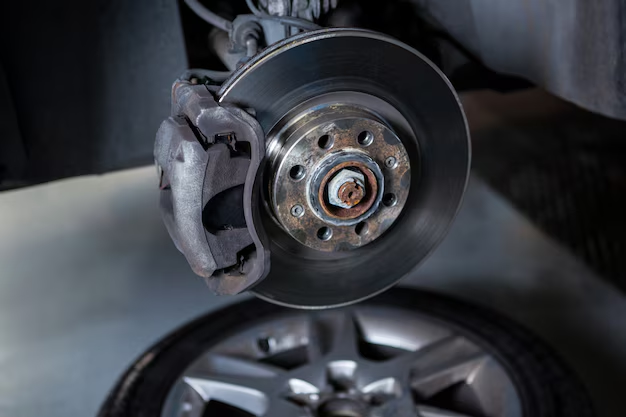
One of the most common occurrences of brake failures can be attributed to very high-pitched squeaks or squeals.
Common brake noises. The noise of grinding is what the drivers hear when the brakes are applied.
Normally, this kind of brake noise is due to the system component vibrations. In most cases, the squealing sound is because the brake pad vibrates against the rotor, particularly when the hydraulic system is under pressure.
If the brakes are making light contact, it can lead to making a grinding noise, which is a sign of potential problems. In most instances, it may result in the production of a grinding sound, thus indicating that the brake pads have been worn out.
The cause of a squeaking sound is the lack of lubrication in the brake parts.
There are worn brake pads, and the brake wear indicator, which is a small piece of metal, is now rubbing against the rotor to inform you that it is time to change your brake pads.
Moreover, some environmental factors, like humidity and the accumulation of dust and debris, may also cause this type of squealing noise.
Even though a shortage of lubrication can result in brake issues, a brake squeal doesn't always mean that a severe problem is present; it is a sign that your car's brakes need to be checked and that you might need to replace your brake pads to be on the safe side.
In case the squeak continues or becomes worse, it is best to have a mechanic check your brakes thoroughly to make sure they are in good working order.
A grinding sound or grind that is confused with the brake system coming out of your car's brakes is the most serious indicator of potential damage within the brake system.
Basically, this grinding on the brake sound is very common after the brake pad has completely worn down. You may be able to hear a grinding sound, so there is the metal backing plate of the brake pad, which makes direct contact with the rotor.
This metal-on-metal contact can cause severe damage to the rotor; thus, you will be required to have your brake pads checked for wear.
Replace the brakes and the pads, and rotors if you hear a grinding noise when you apply the brakes or notice the high-pitched squealing that often accompanies worn brake pads. Sound coming from your brakes; you must take the issue promptly to a mechanic.
Worn-down brake pads can still be driven, but this will eventually lead to more expensive and time-consuming repairs, such as replacing the rotor.
Immediately, schedule a brake inspection with a qualified mechanic to locate the damage and determine the necessary repairs. Don't disregard a grinding noise, which can weaken your stopping power and, thus, you may push the pedal harder than necessary.
Losing braking at low speeds can be very risky.
A rattling sound coming from the brakes can mean different things, which you should definitely not overlook.
Most of the time, it is a brake noise indicating that the parts of the brake calliper have loosened, which might be the case of the hardware being worn or broken.
The calliper can be vibrating, or it can be moving too much, so that when you apply the brake, or you hit a bump, the rattling noise is audible. In case you are driving on a bumpy road, and you hear a squeaking noise, it may be a sign of possible brake problems.
To some extent, the rattling sound could also be a signal of metal-to-metal contact if the brake pads are worn.
Unevenly worn brake pads or excessive play within the assembly can cause damage.
If you want your vehicle to brake efficiently, particularly if the road conditions are changing, the use of semi-metallic brake pads is a must.
Besides that, worn suspension parts such as ball joints or tie rod ends can sometimes fake brake noise, thus it is very important to have a thorough checkup by a professional mechanic.
If you are going to have your brakes checked because of a rattling noise, the mechanic will be able to pinpoint the problem and give you the right solutions to fix the brake system.
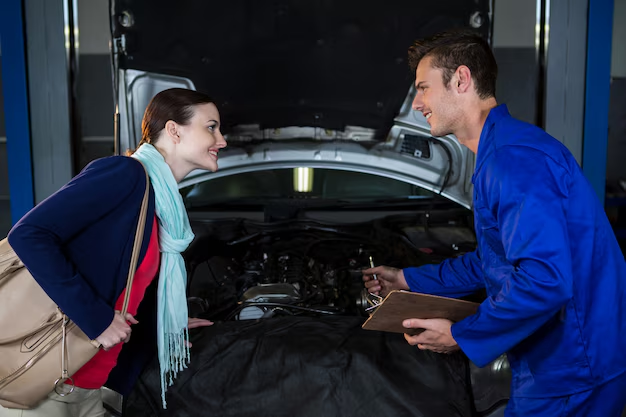
It is always quite helpful to know when it is the right time to bring your automobile to a qualified technician for an in-depth inspection of the brake parts and to get a second opinion.
A response from a local mechanic is very important when confronted with brake noise. Some noises from the brakes indicate that there are serious issues inside the system, and those issues have to be resolved immediately.
One that is constant and severe, in particular, a grinding sound, especially if the sound occurs when the brakes are pressed, generally indicates that the brake pad material has been totally worn out and that there is metal-on-metal contact between the brake rotors. Such a case is certainly bad for the rotors as well as the brakes.
Not only is the rotor being damaged, but the brake system's capacity to stop the car is also significantly lowered; therefore, a risk of brake failure in the car is present.
Any rattle noises or clunking sounds might be due to calliper parts that are loose or suspension parts that have been damaged, hence, the stability and control of the vehicle can be affected.
If you hear these noises, you are supposed to get your brake pads replaced immediately.
Additionally, if you experience an abrupt change in the brake pedal feel, for instance, sponginess or increased travel accompanied by a strange noise while braking, it may be indicative of an issue with the brake fluid or the master cylinder that is about to fail.
Kindly let the experts handle it.
It is necessary to have the car brakes inspected regularly as well as to perform the needed routine maintenance if you want to extend the life of the car brakes and keep yourself safe on the road, especially when driving at high speeds.
Part of a proactive strategy is to have a regular inspection with your mechanic, who evaluates the thickness of the brake pad material, the condition of the rotors, and other parts.
Besides the assessment of brake material and rotors, the mechanic will also check for the presence of moisture in the braking system during brake inspection.
The mechanic will also check the brake fluid level and condition, as well as look at the calliper for the source of the leak or check if it is damaged.
Additionally, the cleaning and lubrication of the brake system should also be considered as part of the regular maintenance to inhibit the development of rust and corrosion that could lead to the brake's squeaking and loss of its performance.
Keeping up with the maintenance schedule that has been advised to you and handling any problems without delay, you will be able to stay away from the production of a grinding noise.
In the case that you make an application of the brakes and the noise comes from your brakes, you should definitely have the problem looked into as soon as possible.
At the same time, stopping the grinding noise through routine brake maintenance and repair will allow you to keep the highest level of brake performance.
Provided that your brake system is regularly serviced, it is thus possible to operate with a clear mind that your brakes are functioning correctly without any issues, and the brake system is at its best, which keeps you from getting into high-pitched squealing.
Brake repair pricing is deeply influenced by a multitude of factors: what kind of repair is needed, car brand and model, labour rates of the mechanic, etc. Replacing brake pads that are worn out is usually less costly than replacing rotors or repairing a calliper.
You may have to replace the brakes, including the pads and rotors, if the brake grinding has caused the rotors to be damaged. Further, a brake fluid flush or calliper rebuild charge will add to the total sum of the bill, especially if it is that the pads must be replaced.
It is vital to get the estimates of shops that you trust before committing to the work. Don't forget that the use of good-quality brake pads and rotors will not only let you use them for longer but also give you better performance from your brake system, which might be worth it in the long run.
Periodic brake checks and servicing are also capable of preventing very expensive brake repairs by identifying the issues at an initial stage. A squeal that can be fixed in a very cheap way, but if you choose to disregard it, it will cost you much more than that sometime later.
Brake noises never fix themselves. Get your brakes inspected today and avoid expensive damage tomorrow.
Book your appointment